
Marked Knife, Fork, and Tinned Spoon
Marked Knife, Fork, and Tinned Spoon
$18.95
Description
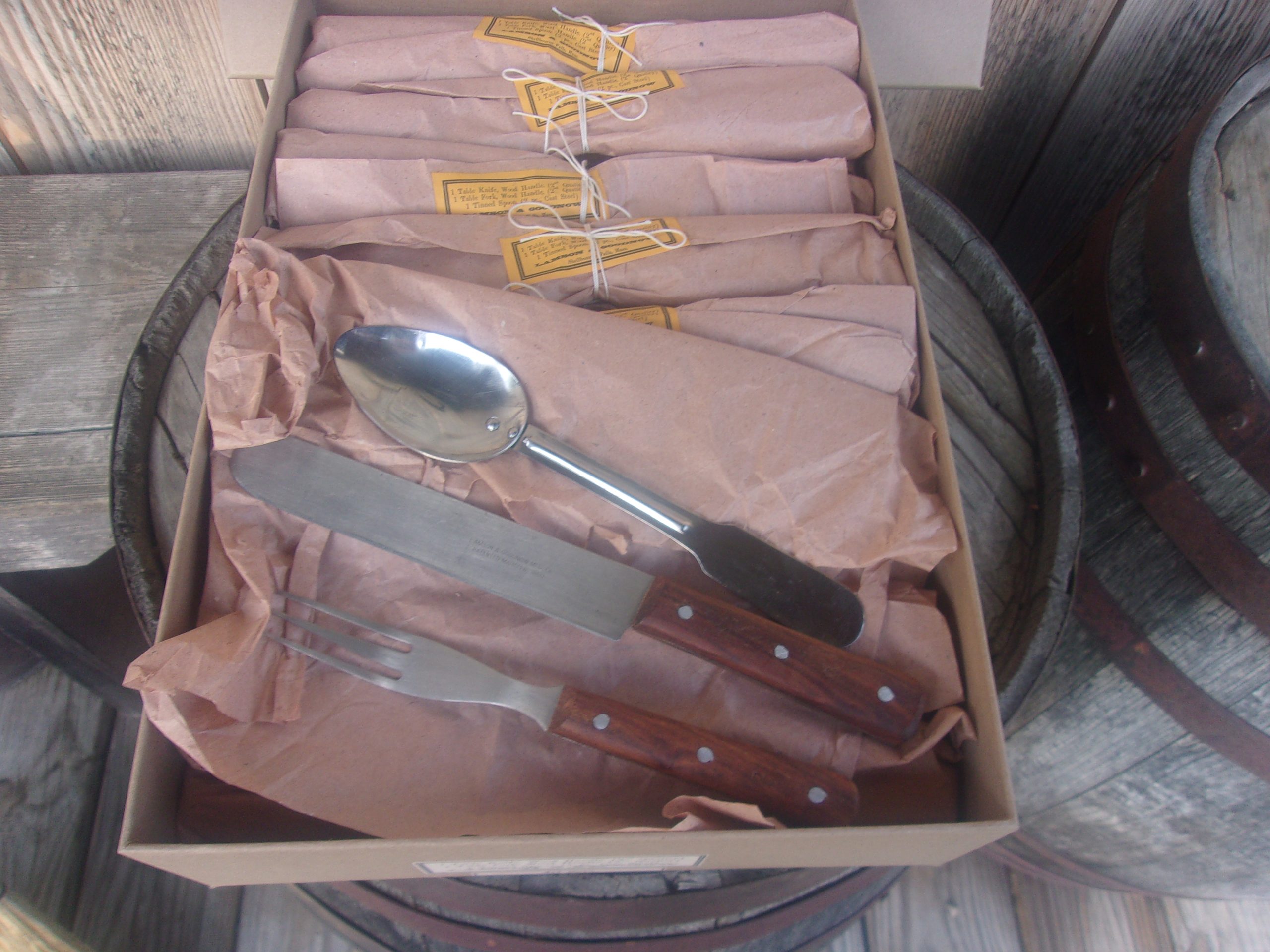
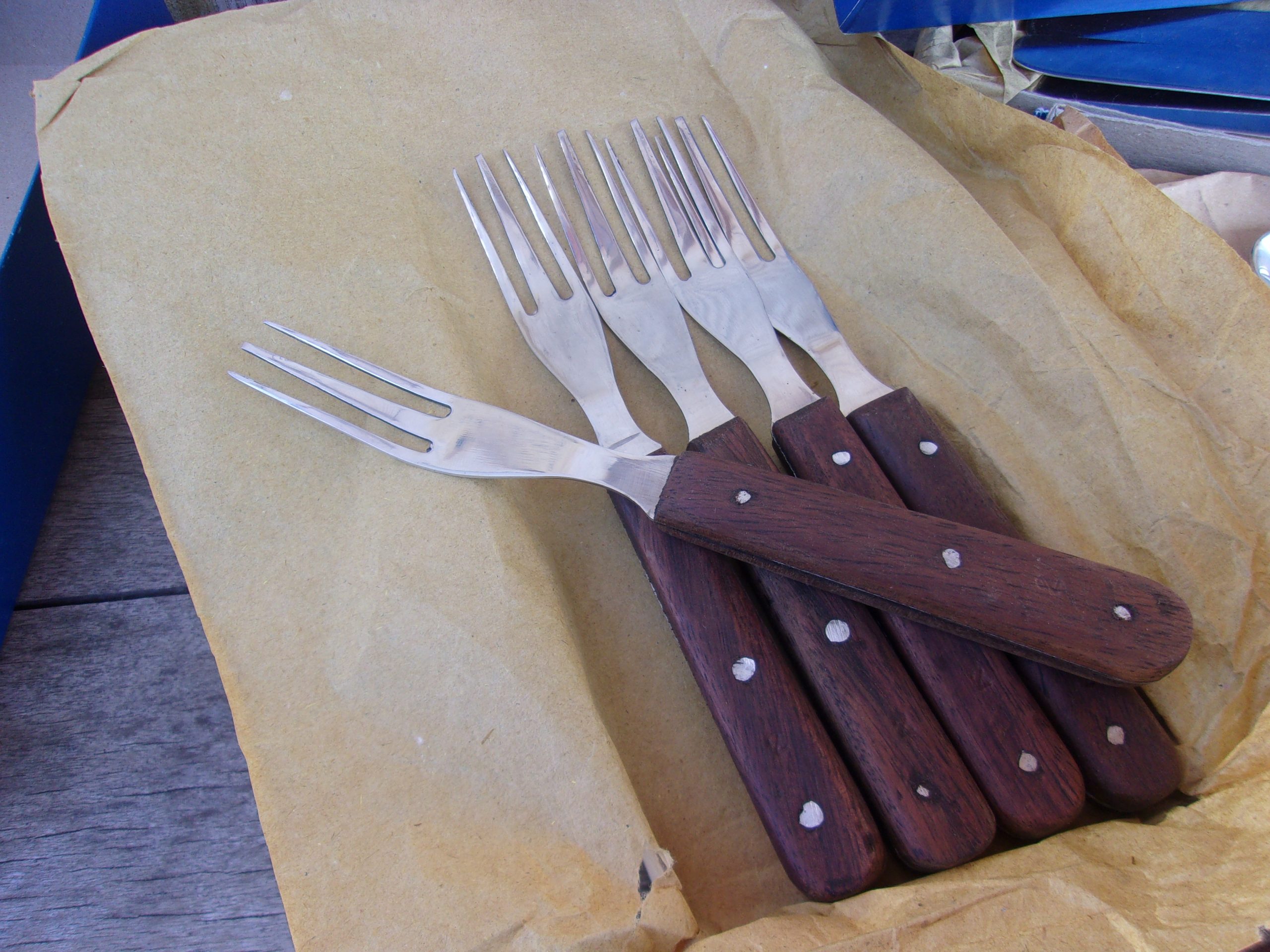
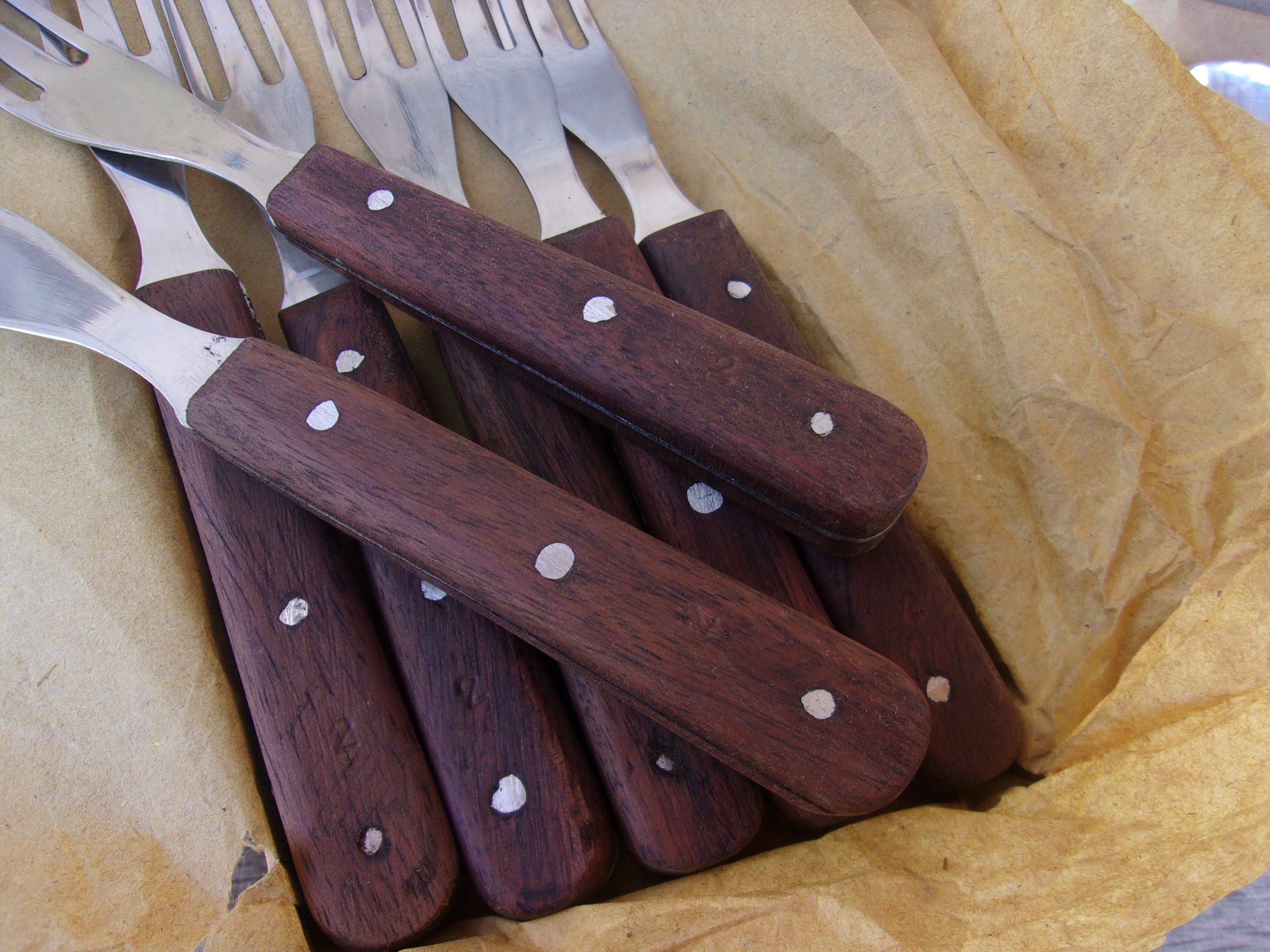
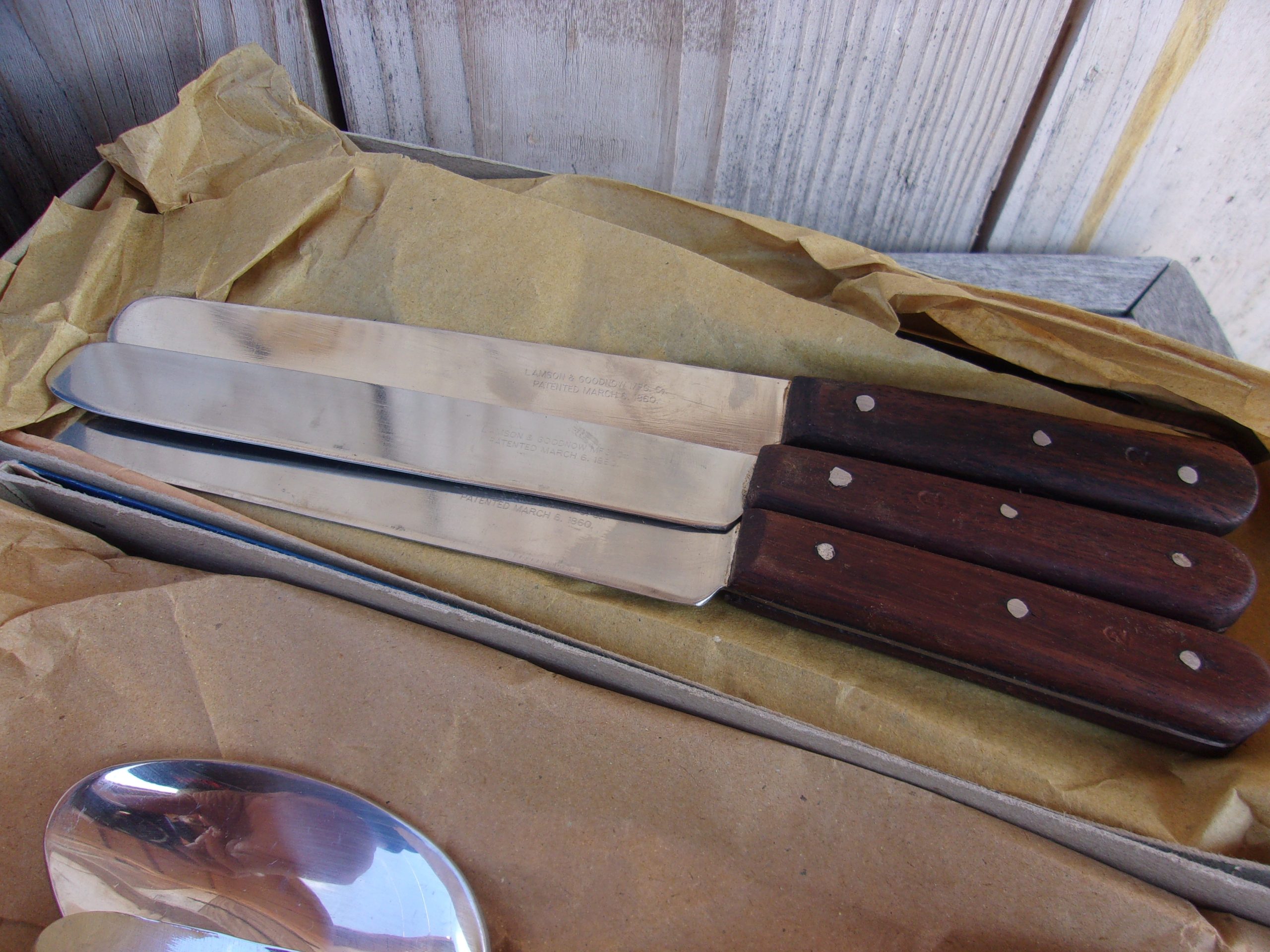
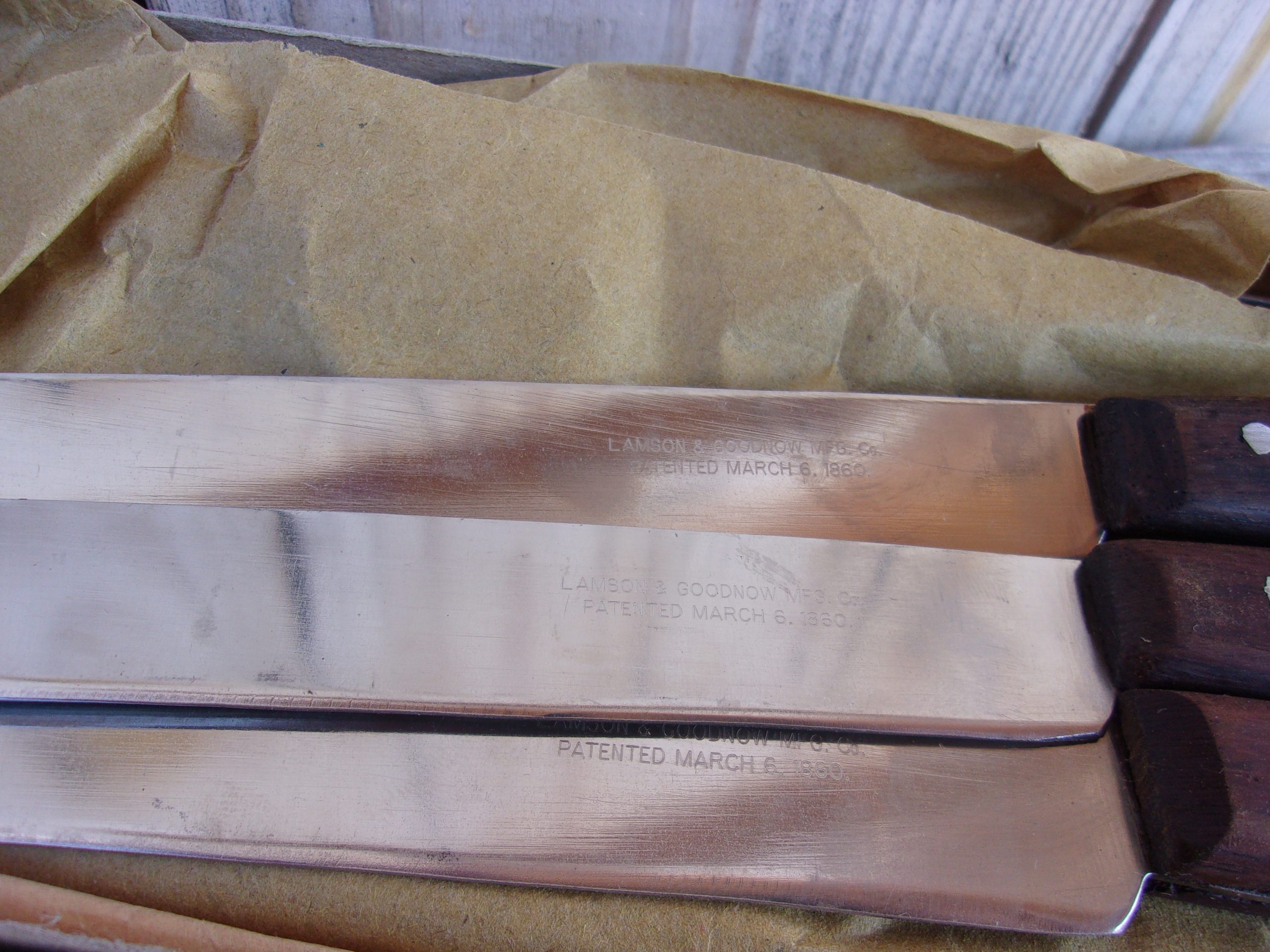
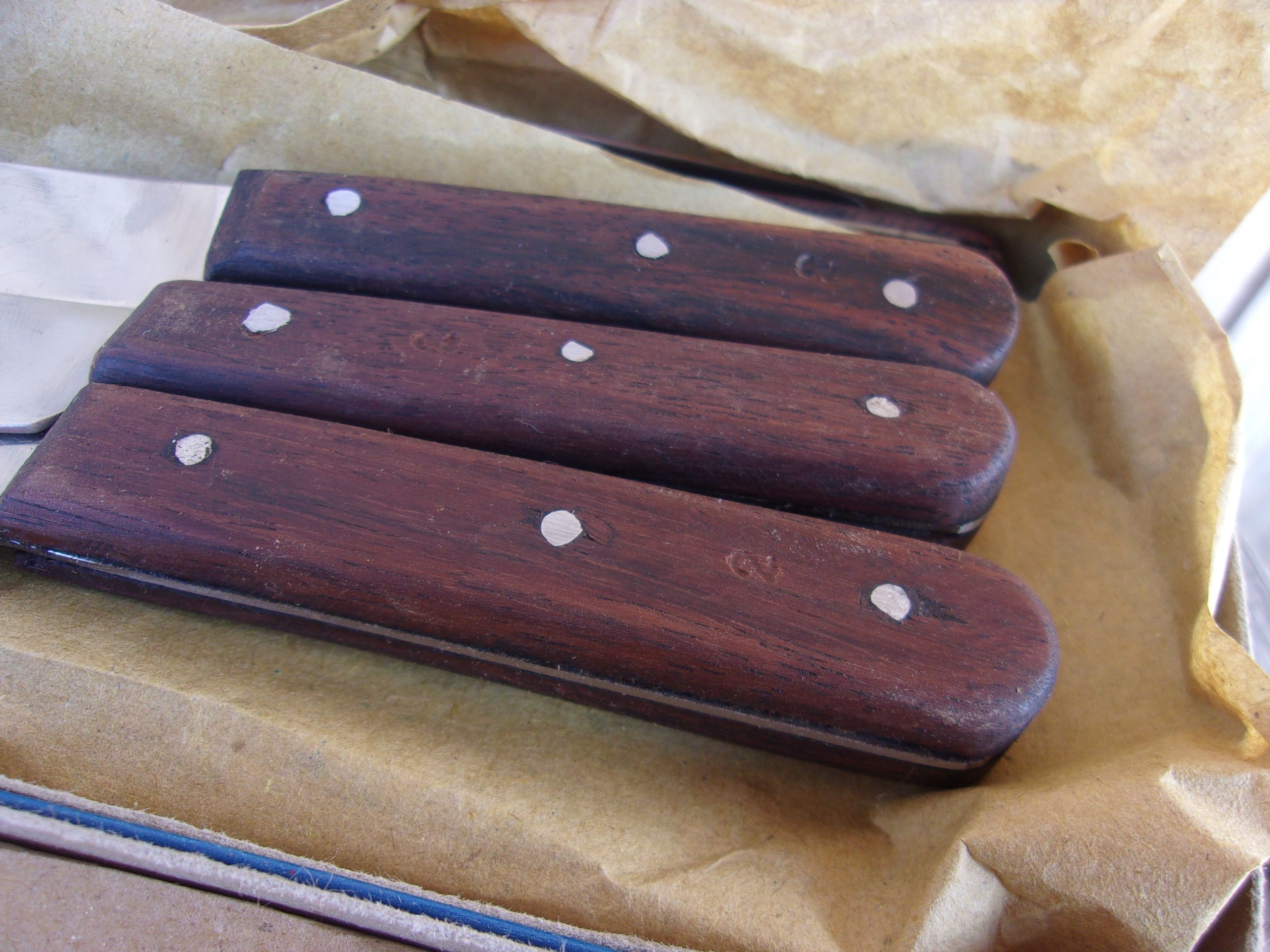
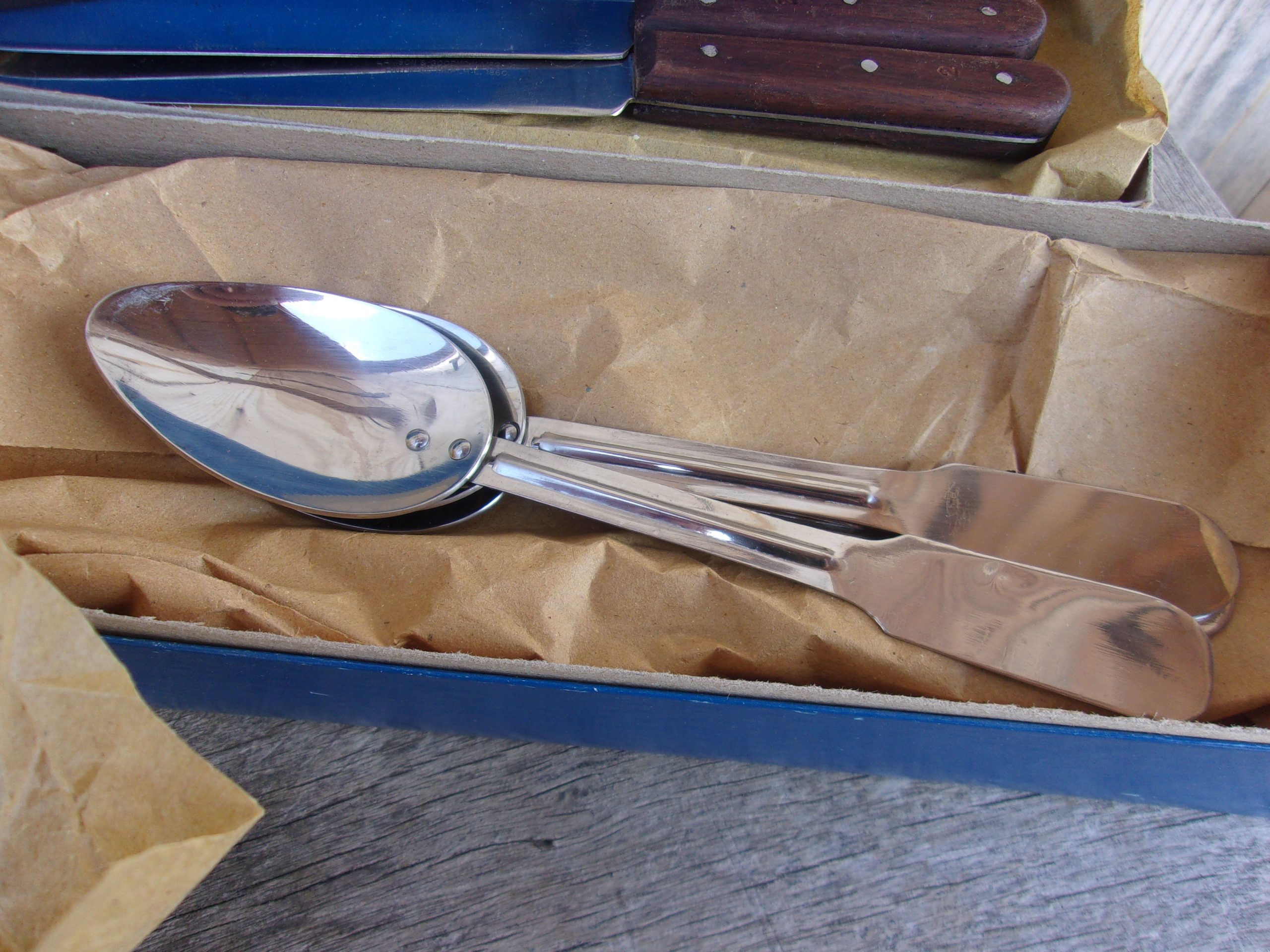
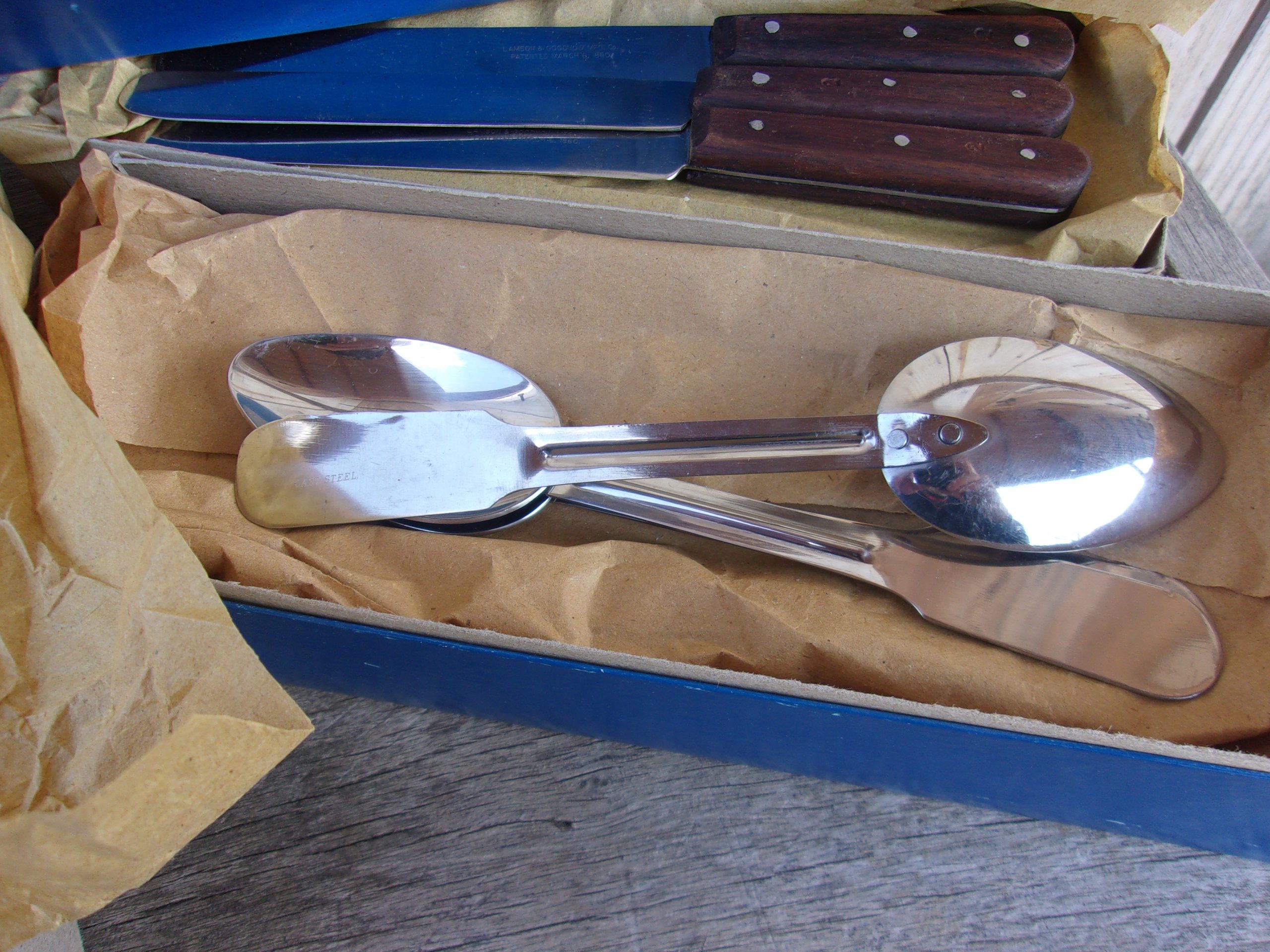
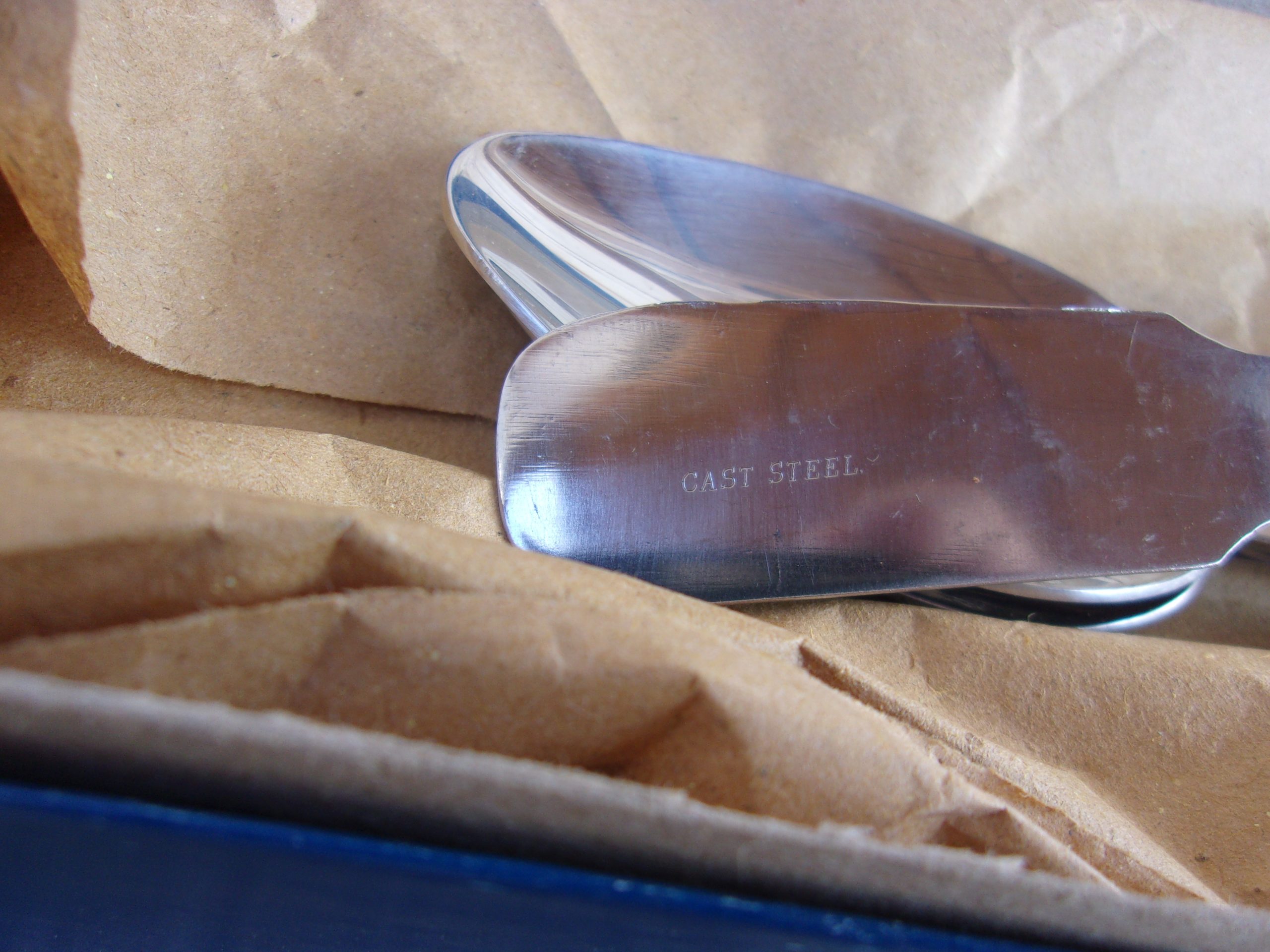
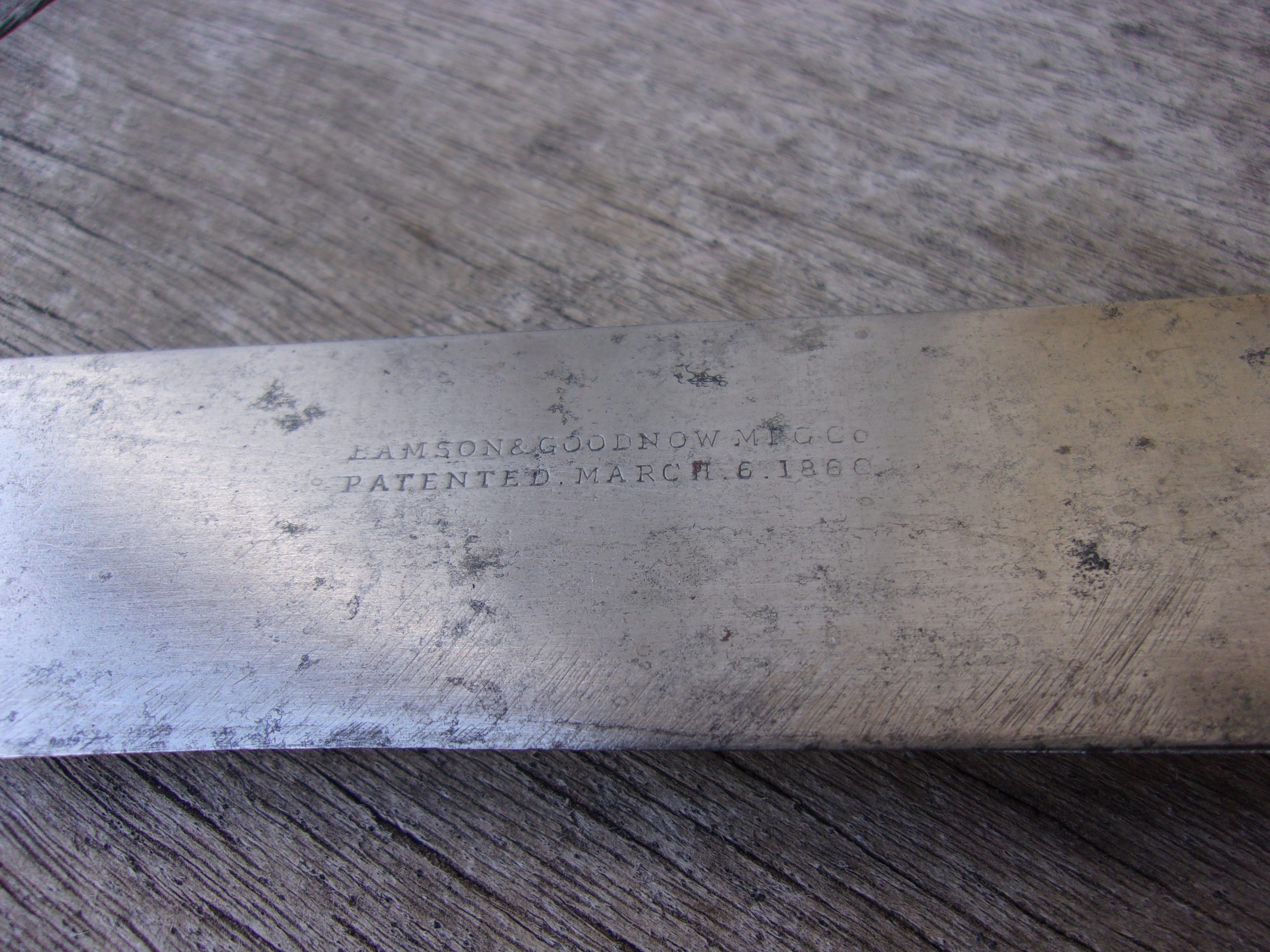
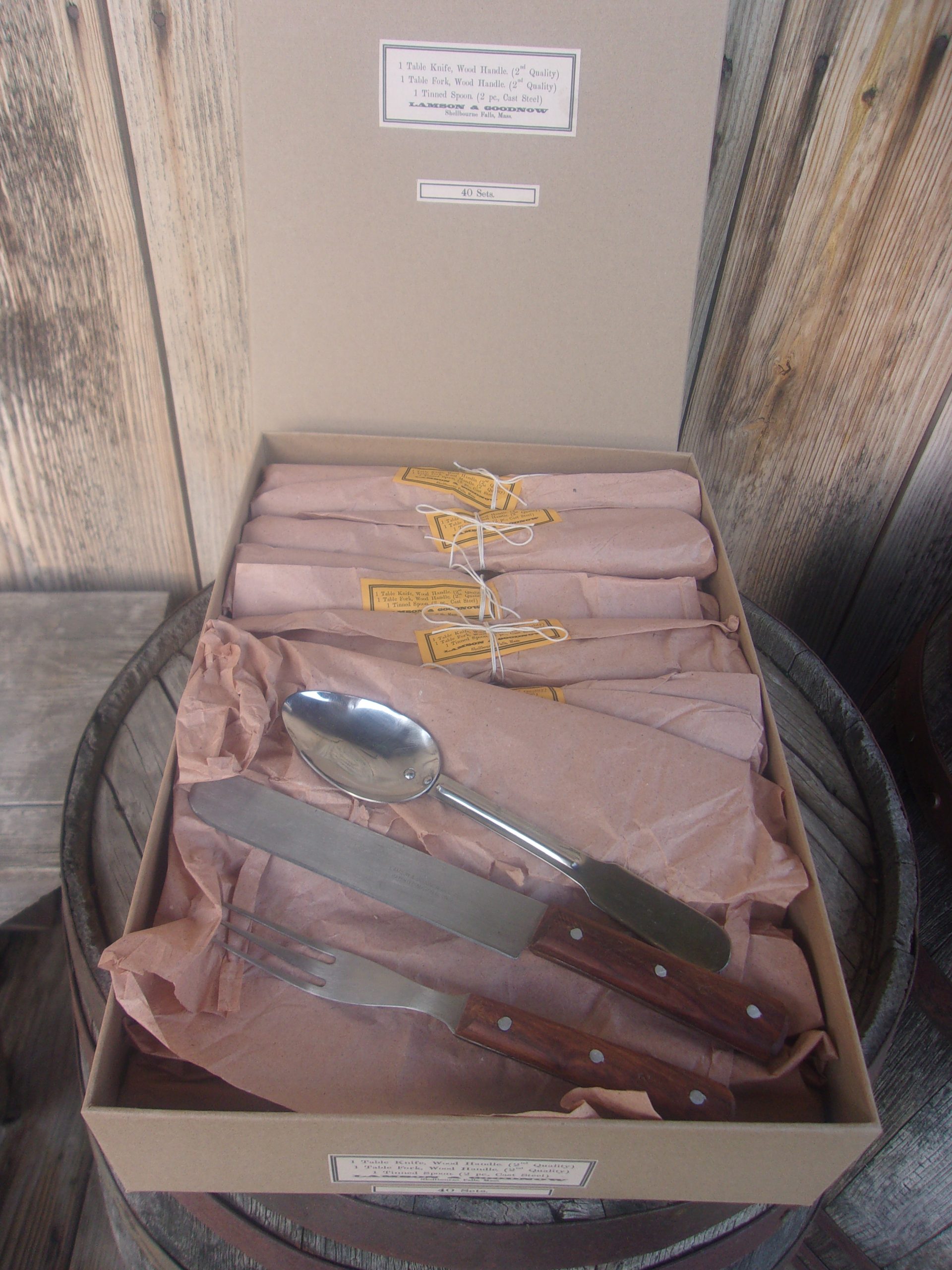
This is the basic pre-war and wartime era plain wood handled knife and fork as used by thousands of troops during the Civil War by multiple states, brought from home, and bought at sutlers and mercantiles by the 1,000s. The knives (generally the only marked of a set), are marked for Lamson and Goodnow, a Massachusetts firm during the war and one of the most prominent makers of the period, producing for the military and civilian markets alike. “LAMSON AND GOODNOW MFG. Co., PATENTED MARCH 6, 1860.” (see photo of original blade included) Some state issued pieces and many private purchase sets and “brought from home” utensils documented to soldier’s use bear this mark. The patent was actually rec’d for a handle attachment and bolster and stamped onto the knife blades. In our many years of collecting and dealing we have inventoried several common knives without the patented bolster which still bore the patent date, found in both wood and bone. L&G apparently sold these less expensive pieces while still utilizing their standard production blades which were produced with the mark. We have also handled at least two knife and fork pairs which had the most common plain wood handle, bore the patent date, and also had a number “2” stamped in the wood handle. It is speculated that these were pieces which did not pass their quality control inspections, were fitted with the more crude and plain wood handle and marked as second quality. (a common practice in the period for makers of all kinds of items, which is the advent of the discounted marketing of what is now commonly known as “factory seconds”) Just as in our originals, the fork is plain without markings on the metal. The forks are also made in a primitive fashion as one of our originals, with the center tyne a bit wider and flat, and the two outer tynes more pointed. (possibly what made them a “second”) Made of less expensive steel for the lower income market, we have marked the wood handles on these sets with the “2” as in the originals mentioned. We have left the somewhat crudely finished wood handles as is, but they will sand and finish up well should you want to do so. The result can be remarkable should one prefer a bit higher grade example, such as for the ladies or gentlemen. In addition to the other sources, Soldier’s Aid Societies also distributed this type of ware to men in the field which is what we have represented here. Each set comes wrapped in our signature period correct brown paper tied shut with a simple identifying label. In addition, by request, the purchaser can have either a Northern or Southern Aid Society label added at no charge. PLEASE indicate if you want a Society label and specify No. or So. or none will be added. Sorry, no labels are available after items are shipped. Commonly, table settings were purchased as a knife and fork only, with spoons being a separate item, which is why one does not find many matching handled spoons, except in some higher end tableware, which had all pieces made completely of metal, including the handle. Our set comes with our common two-piece tinned spoon. This is the utility spoon of the era – the cheapest the common man or soldier could purchase – the same with the government, typically the quality they issued. An unrefined, practical utensil, the “fiddle” handle was riveted to the spoon with two steel rivets, then the excess ground smooth. The two pieces were stamped out in quantities in sheet metal. This copy has the same type of construction. The bowl comes to a slight point rather than being more rounded, a common period feature. As found on several originals we have handled, the spoon is randomly marked on the back with a small stamp reading “CAST STEEL”. This mark, commonly seen with the quotation marks and in italics, begins to appear, often randomly placed, well before the war. The process it designates was first developed in the 18th century, also known as “crucible steel”, a method which intended to make a better and more refined blending of the alloys. It does not mean the item was “cast” – it supposedly speaks to the quality of the steel. By the mid 19th century it is seen stamped on a gamut of objects from the period, used by manufacturers to claim their products as a cut above the norm in the quality of materials. (tools, weapons, cutlery, etc.) It is debated whether this was actually true in many cases or more of a marketing gimmick by some makers, as the mark was routinely used, regardless of method or quality. (somewhat like calling something non-fat when it never had any) We have added it here as a particularly period feature for your enjoyment. Here is a fine representation of documented, dated, and marked eating utensils, a set a cut above the rest which we are excited to offer our friends in the Living History community! Note: Sold in Sets Only. Limited quantity and limited to two sets per customer order.
Additional information
| Weight | 0.22 lbs |
|---|
You must be logged in to post a review.
Related products
-
-
-
Sutler of Fort Scott Gift Card
$25.00 $200.00Price range: $25.00 through $200.00
Reviews
There are no reviews yet.