
Vulcanized Rubber Blanket, So Maker
Vulcanized Rubber Blanket, So Maker
Description
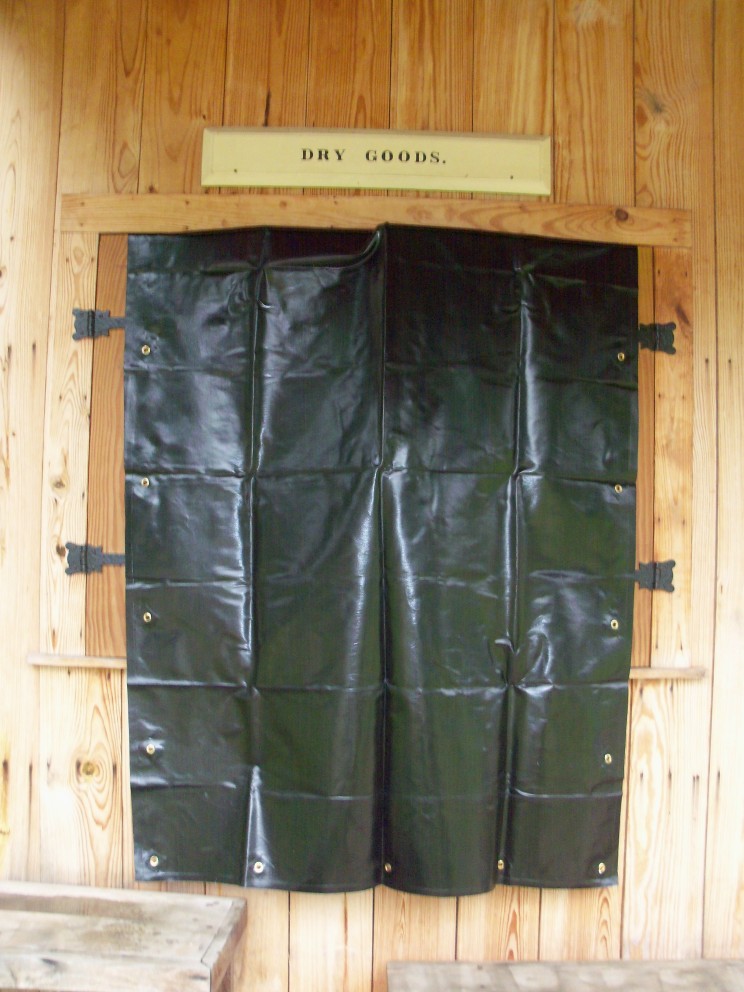
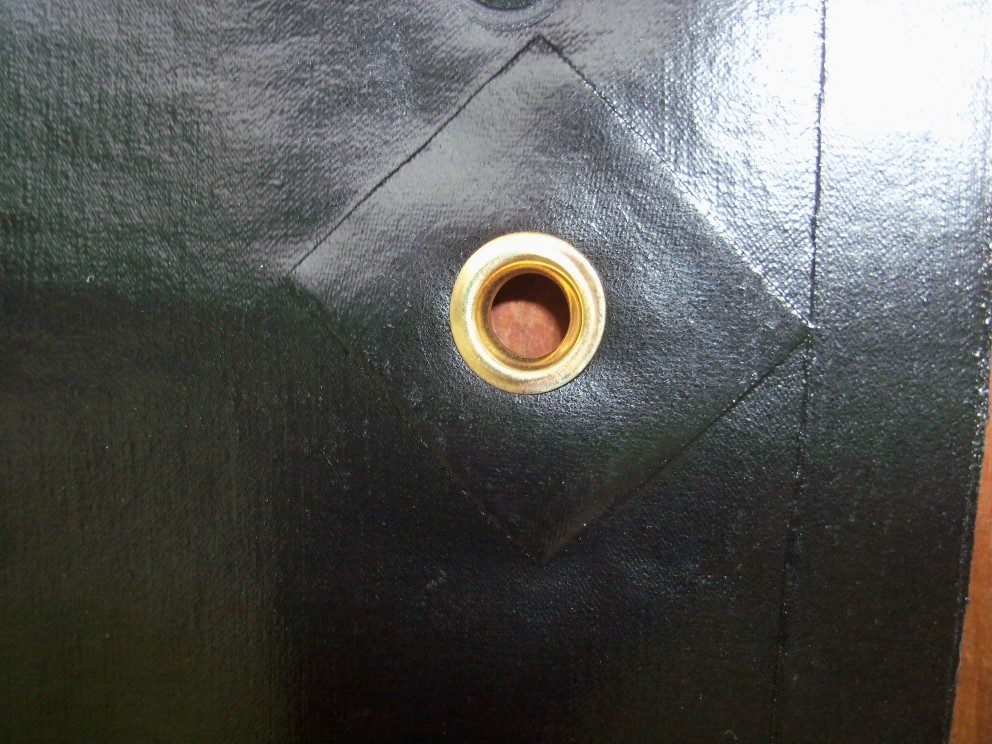
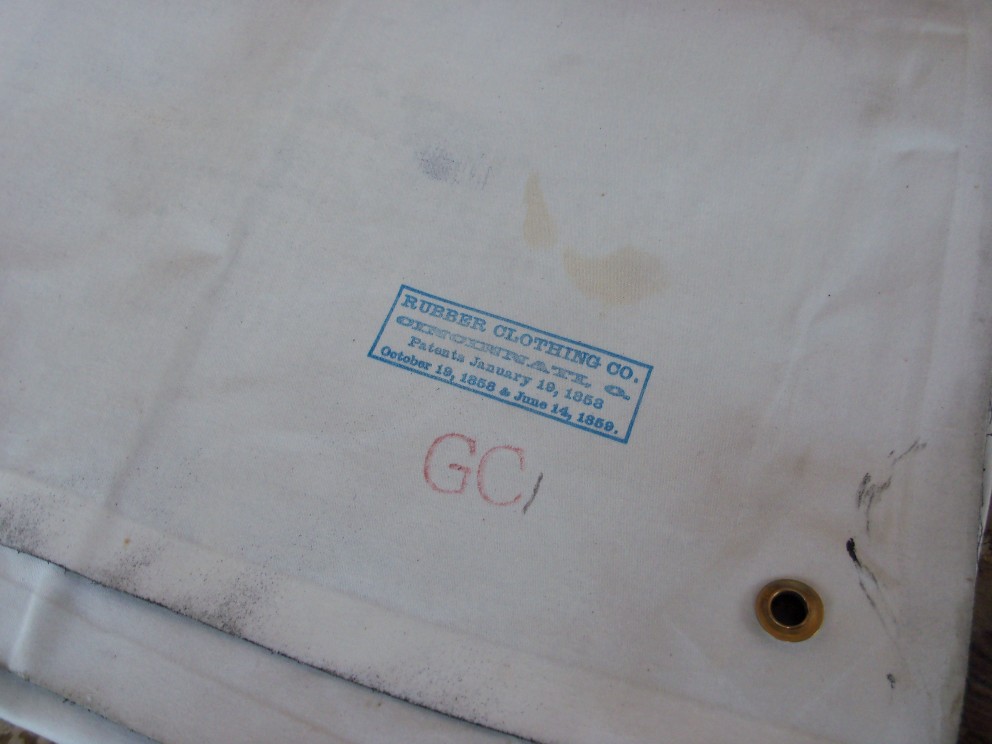
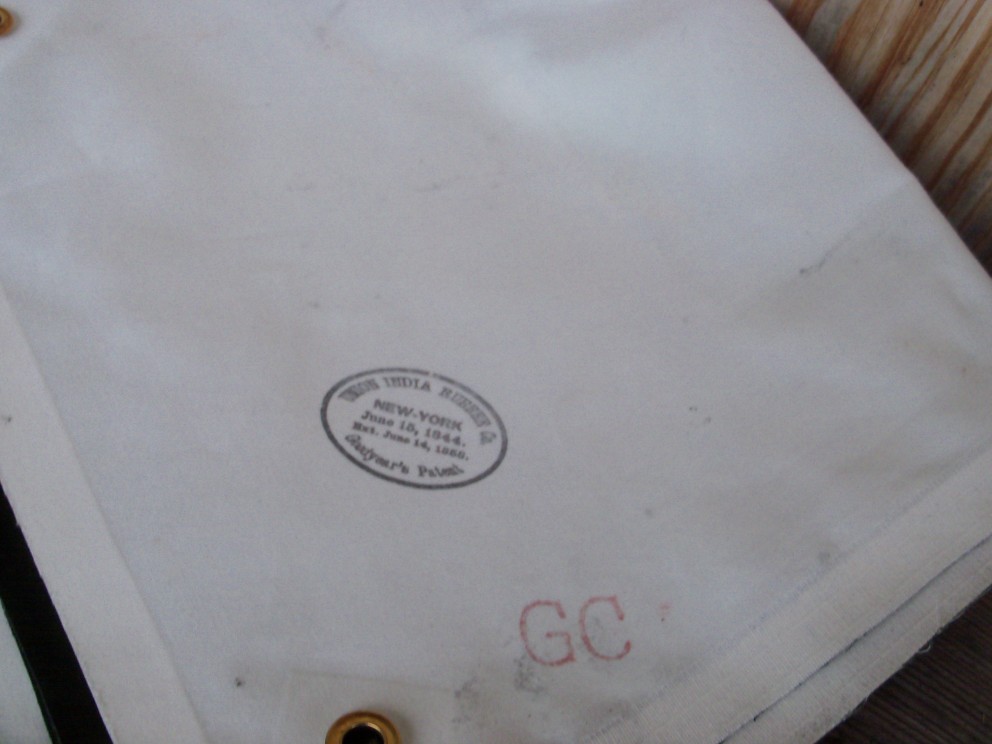
This is our newest lighter weight vulcanized rubber ground blanket representing that produced by William Hudson of Philadelphia and New York who produced before and during the war and may have utilized patent infringement vulcanized material, possibly from the infamous Horace Day. Made in the Army pattern with twenty 5/8″ brass grommets. (seven on length side including corners) Vulcanized rubber coating on one side of white cotton. Reinforced around the edge and under each grommet. Each one bears the stamp of the documented maker with the #2 in the center indicating his 2nd Quality production line. The coating on these is intentionally thinner and ocassionally less even than the standard US Army , No. 1 grade ground cloth, in order to replicate the product produced by such dealers and the lower grades available and actually issued by the US. (The Army also purchased by contract at reduced rates No. 2 and No. 3 quality gum blankets, and Hudson offered contracts in both at reduced costs. It is likely he also delivered lower grades with the higher costs with possible kick-backs to corrupt Army procurors) As a result is logical to surmise that they may be a bit less durable in the long term, especially if abused. These ground cloths were made as a protection against dampness underneath and also to use as a rain cover over the top of equipment or person. There is some confusion as to what the actual effectiveness of this item was during the war, even the heavier grades, especially as it relates to most reproductions. Based on a large sampling of the QM reports during the testing of various productions of the item, it is not an exaggeration to say that most current reproductions are more effective, in some instances by far, than their original counterparts. We have field tested these gum blankets and are satisfied with their overall effectiveness in providing their intended utility. However, we must state, due to the unrealistic expectations of some “re-enactors” in the market place today – you may not be able to stretch this over a wood frame and float in it, ad infinitum, like a boat down the river. Despite a few photos showing prototype vulcanized material in such use – the fact is that during the period their was great variance in the quality of the finished product and few items, even those which received patents, and those which were vehemently claimed in advertisements, ever lived up to the standard that most people today would consider “waterproof”. (it’s a ground cloth not a life preserver) (the manufacturing process, then and now, is not absolutely perfect and there are inevitably tiny anomalies found in the surface of the material – we have found these anomalies in every one of the many historically made samples we have examined available to the Living History community, regardless of maker – the fact is there are only a few makers of this material still producing anywhere – regardless of who may be making the end product from it. There was but one or two exceptions as it relates to the anomalies which we found over the years that were actually made significantly heavier than the original item and as such are either of an anachronistic quality, or a rare anomaly in and of itself. Note: Even with originals we have examined there is great variance in weight – few close to the specs indicated in QM regs and these anomalies are also seen on originals.) WE actually grade the items as we get them in and determine how they will be sold, marked and priced appropriately, as was supposed to have been done in the day. We inverted the both our standard and lighter weight blankets in a tub and actually filled it with water – even over areas where such manufacturing anomalies were clearly visible. After several hours, with the blanket stretched under the weight of the water, a few of the thinner areas showed slightly discolored spots with the thinnest having extremely minor beaded water – this is well beyond the stress of it’s intended purpose and completely consistent with the intended effectiveness of the item. (these imperfections are caused by very tiny air bubbles in the process and appear as tiny pin point size holidays in the coating when held up behind a very bright light – they can even appear somewhat prolific, when this is done. They are not evident to the naked eye on the coated surface with normal viewing. We must note that somewhere along the line some person has publicly posited – my guess is either a unscrupulously competitive vendor or perhaps some “internet expert” – that being able to see such pinholes was evident that the product must be ineffective at stopping water. In the process of coating this material, there is clear treatment placed on the very tightly woven cotton backing which renders it all but waterproof before the rubber is even applied. Afterward, an additional clear coating is also applied in order to aid in the curing process, neither of which will block bright light. Again we point to our own controlled trials and use of the product in the field. Bottom line – if you want a period correct So or 2nd tier maker gum blanket for a reasonable price that will reasonably do the job it was intended to do – here it is. If you are merely looking for a gum blanket for some inconsequential light show experiment – this one probably isn’t for you.) It must also be stated that care and maintenance of your ground cloth is an important element of it’s life of effectiveness. Abuse of the item will result in the compromise of it’s effectiveness. If you are laying it out on sharp objects, such as pine cones, rocks, sharp sticks, etc, you will likely do some damage to it and it may leak where it is damaged. If you use it for other than it’s intended purpose you may damage it. Proper drying is also essential to avoid weakening to it’s effectiveness. The condition and strength of the cotton material is directly related to the strength and durability of the vulcanized coating. Remember – this item as issued was actually practically applied in it’s intended use a minority of days of the year – yet each soldier was issued a new one annually – as opposed to a wool blanket or overcoat every two years or twice in a five year enlistment – attesting to the wear and tear the original item was simply incapable of enduring. These blankets will shed water and protect against dampness. That is what they were, and are now, made to do.
Additional information
| Weight | 2.50 lbs |
|---|
Related products
-
-
Army Style Shooting Mittens
$21.95 -
Woven Coverlets
$64.95