
Cotton “Piece” Shirt, Panel Front Pattern
Cotton “Piece” Shirt, Panel Front Pattern
Description
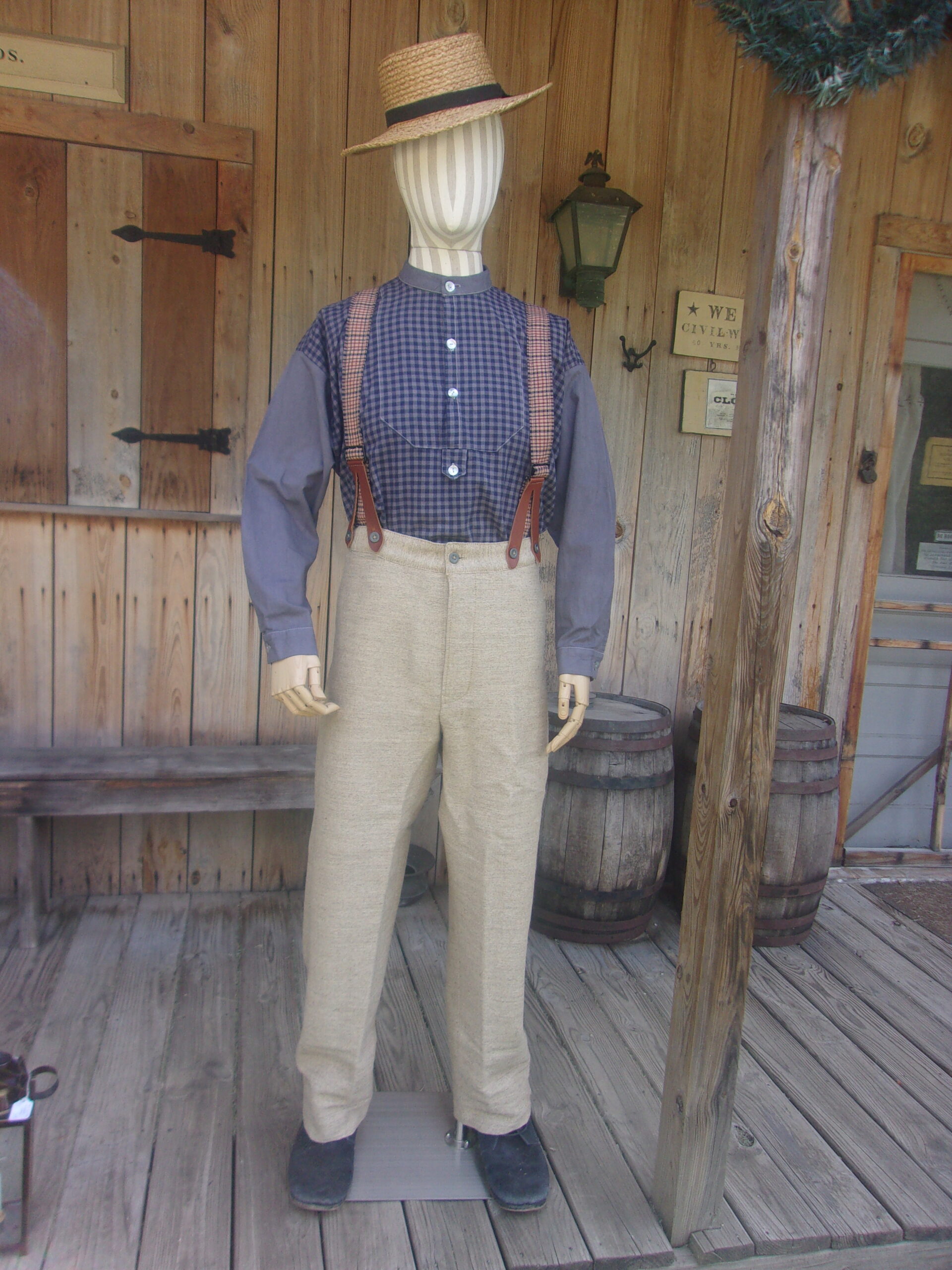
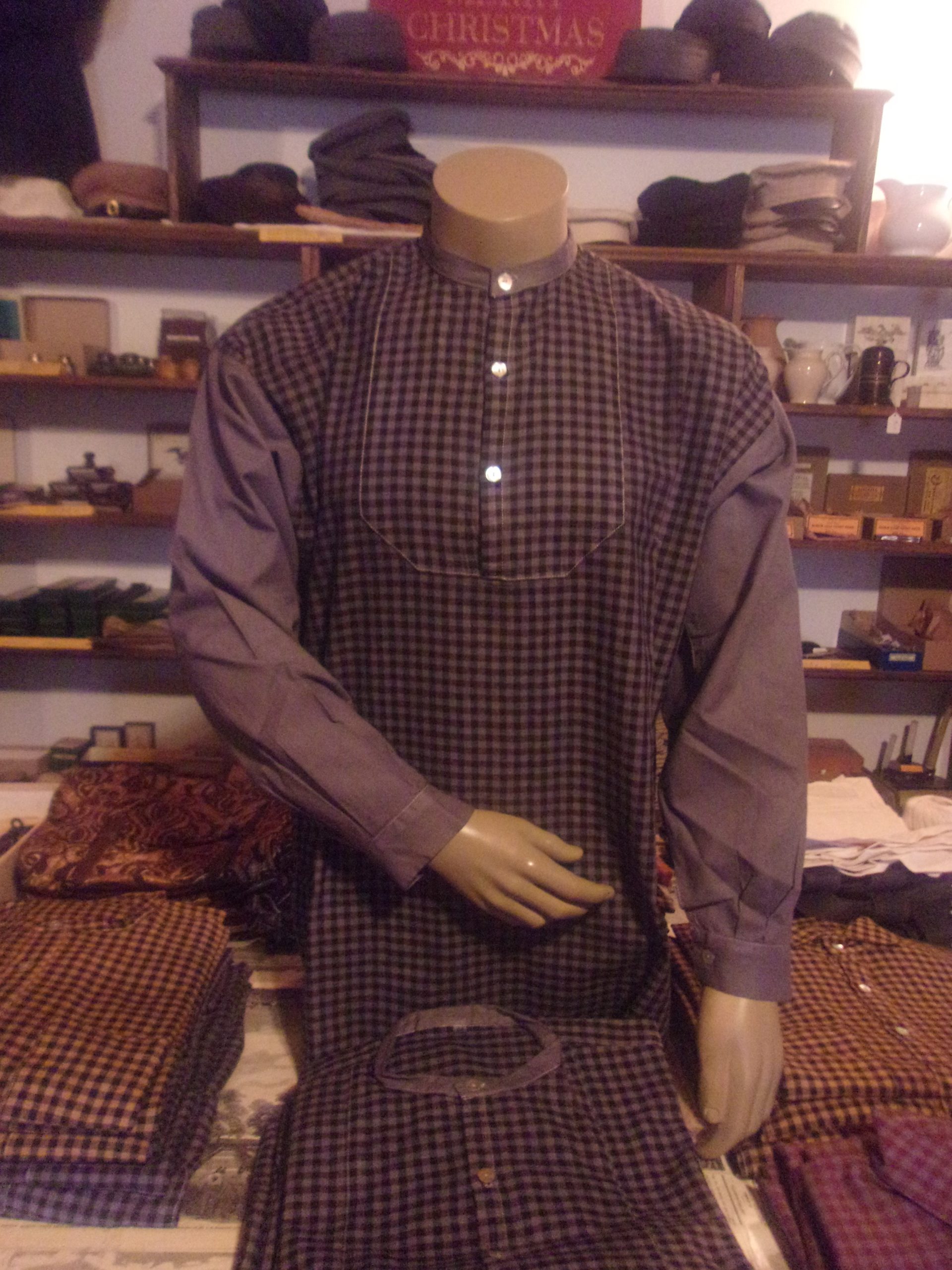
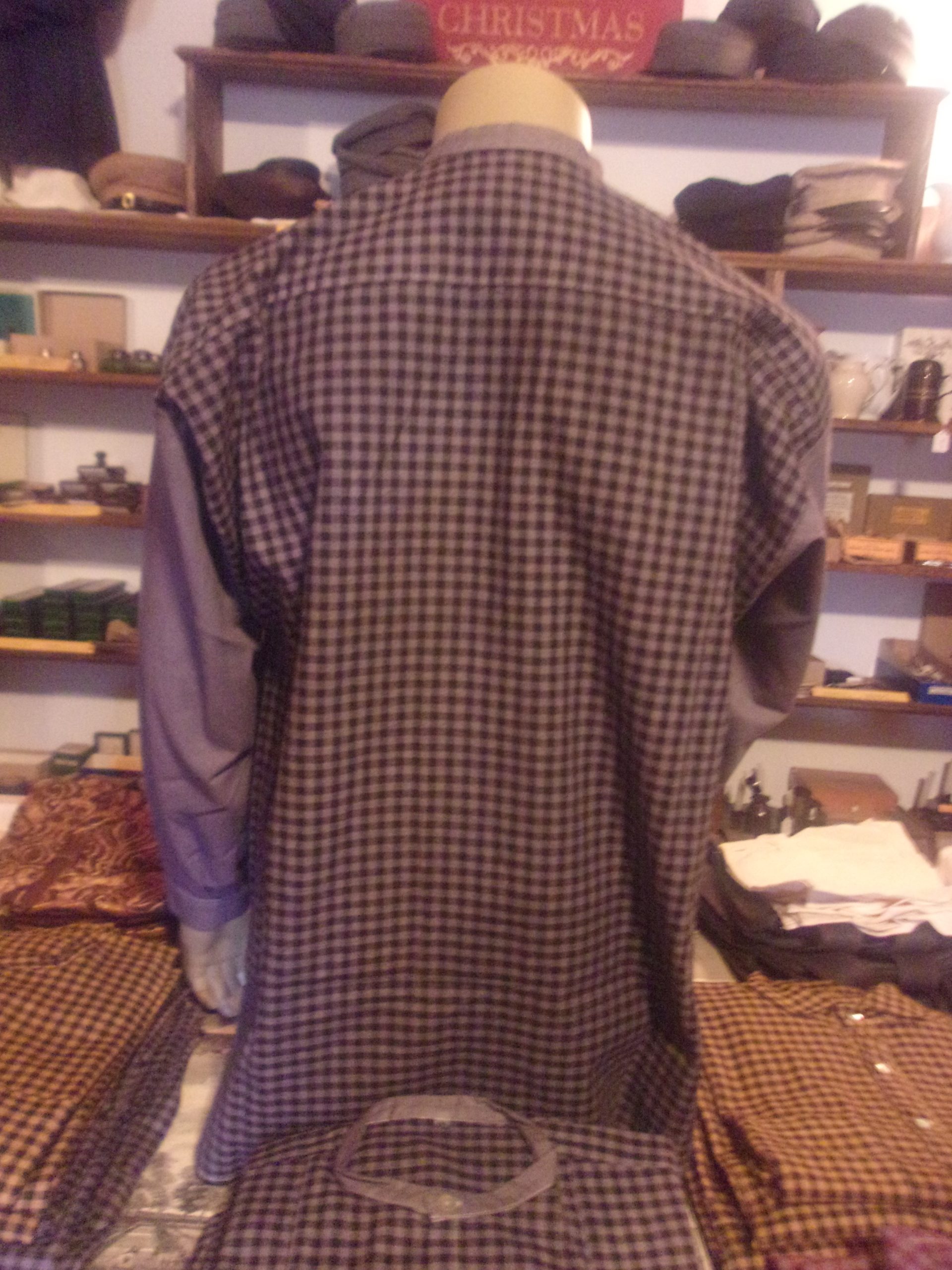
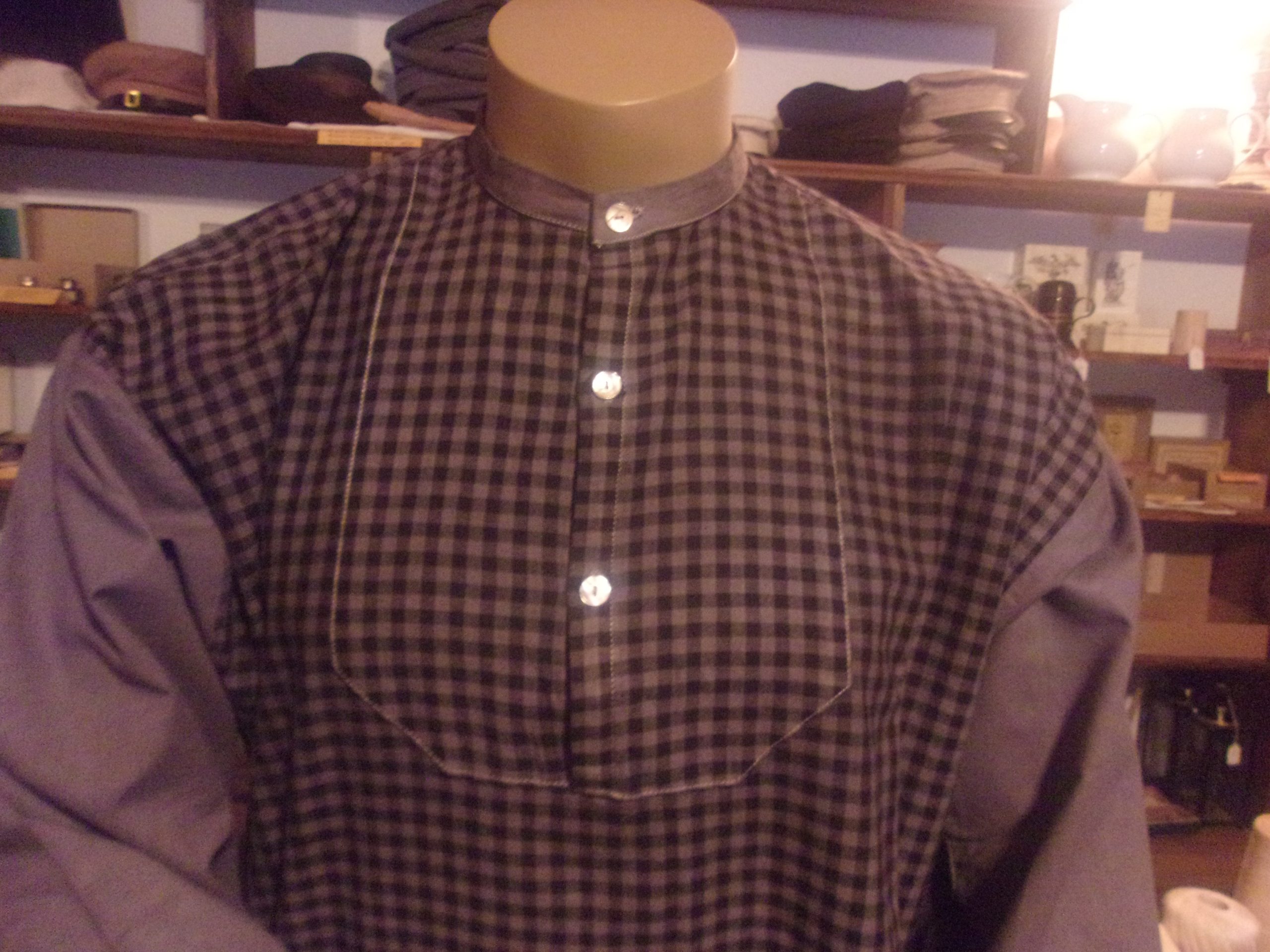
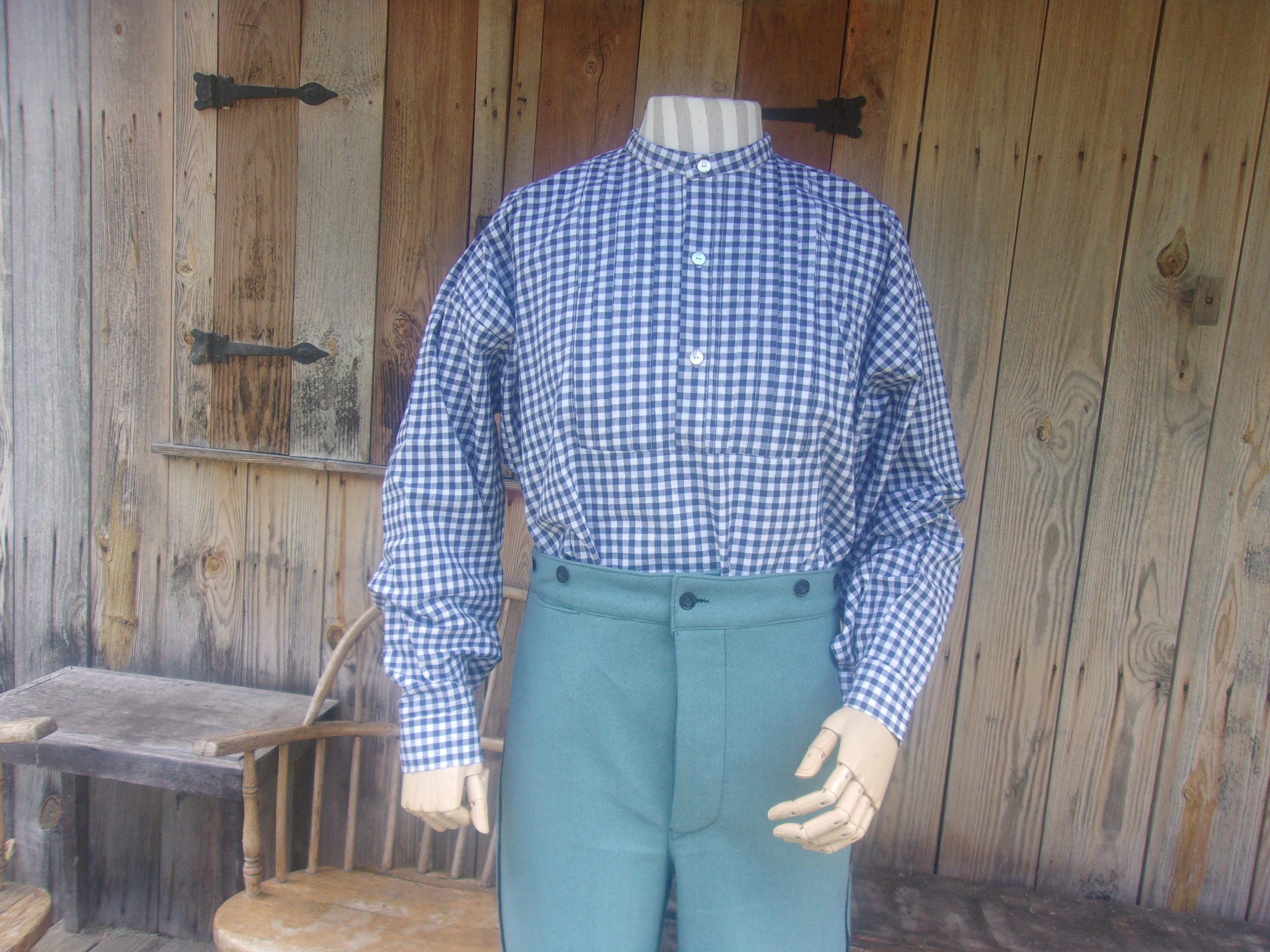
Nice coarsely woven checked muslin/cotton fabric shirt in documented stylish panel front period pattern with standard gusseted sleeves and a banded collar. Flat back shoulder seam. (Note: Full mannequin photo shows this shirt with bottom tab on panel – this feature is not present on our current run of this shirt – please reference rest of photos) We have put a very limited run of these shirts together based on examples of period “piece” shirts we have reviewed over the years. These shirts were made from remnants of materials put together to make a working shirt. When able, pieces were matched, such a sleeves, collar, cuffs, etc. One shirt we looked at even had a back made of different material than the front, another had sleeves and collar made from matching curtains. Using what they could get, poorer classes, and those from more impacted communities later in the war, made these garments for soldiers and civilian family alike. The panel front pattern “piece” shirt was also observed in our reviews, which made good sense, as the front of the shirt could be made with smaller pieces of material than the full front on the square pattern even if it did require more skilled piecing and sewing. The panel front shirt makes for a slightly elegant and handsome cut on a common shirt, that sets it apart from the more standard fare, striking a classic pose without all the dandification of the pleated front, even with these remnant shirts of the lower classes. Not wanting to be too extreme, here we produced the shirt with a checked body with contrasting plain cotton banded collar and sleeves with cuffs. All button holes are hand-sewn in the common style. This batch comes with our two-hole genuine shell cut buttons. This initial limited run is available in blue and gray check pieced with plain gray cotton only. Consistent with our commitment to break the “cookie cutter” mould that seems to dominate so much of the period reproduction culture, especially with shirts, we generally make our “made from home” or commercially manufactured “ready-made shirts” in a variety of documented period styles, patterns, and colors. As to sizes, what is listed is what we have. (as with all of our similar shirts these are pre-washed and hand dyed utilizing period method to get our exclusive and popular period color shades and schemes. We cannot predict the effect that modern washing machines and detergents and electric tumble dryers may have on certain types of buttons and their finishes and colors achieved with period dye methods. We recommend hand washing in cold water by itself and hang drying, of course what else would a campaigner do?) To provide a reasonably priced quality shirt with a great look and no sacrifice of authenticity is our goal. Major seams are machine sewn as the majority of shirts produced during the war were. Even in the South, pre-war adverts for personal machines and church and society guilds with communal machines were well known. (All “small” work such as button holes, etc. should be hand sewn as most period machines lacked this technology)
Note: After examining many documented original period shirts, we looked long and hard to find the coarse woven checked materials we desired to make our common shirts out of. Combined with our period method dying process, we are confident that the result is a very authentic and uniquely available representation of the common quality material available of the day. Contrary to some “progressive campaigner” dogma, while muted and drab colors were common, colorful, even bright color prints and weave shirts were quite popular and prized in the pre-war and wartime period. Our color schemes and combinations are well researched and documented and run the gamut of period appropriate. Because the material is produced in the manner of less refined coarse weave cottons, in order to better represent the quality that was mass produced during the period – as opposed to the higher tech produced “finished” cotton shirts of the modern era – there is occasionally some minor anomalies found in the weave. (skipping a thread, small thread pulls, balls, etc) They are not “damaged”, and if discovered after the garment is in production these very minor anomalies are simply left as is on the garment as they represent the types of issues we have observed on similar period undamaged fabric as well. If a thread is actually broken or the anomaly is large enough to require any treatment to avoid risk of real damage, we apply a period type remedy to the fabric, finish the shirt and discount the clothing item in question to cost. Such is the price of authenticity in common mass produced Civil War era material culture. (PLEASE SEE SIZING CHART FOUND AT TOP OF HOME PAGE)
IMPORTANT NOTE on certain COLOR: It has just come to our attention after over 30 years of selling various versions of our very popular woven checked signature shirts, produced utilizing period hand dyed methods, and thousands of satisfied shirt purchasers, that a certain percentage of people see our checked material involving the gray color differently than others. With our gray and black or blue checked shirts, some see a varying degree of purple shade as opposed to simply gray. While some gray dyes may include blue, our gray color dyeing has utilized black only dyes for over 20 years. It is apparently a phenomenon related to the smaller check pattern. First let me say that we are meticulous with our descriptions and have absolutely no intention of ever misrepresenting this or any of our products. Secondly, let me say that contrary to an opinion we received from a “so called campaigner afficionado”, purple is a perfectly appropriate period color which was in common use. (we have been a participant and pioneer in the “campaigner” movement since before it was so dubbed – for some 5o years) Before the development of synthetic dyes, purple was indeed the stuff of royalty and the wealthy and not seen in everyday wear. However, the introduction of aniline dyes in the 1850s, including purple versions allowed the more common folks the opportunity to level the field and they consumed it voraciously. The new-found availability and popularity of the color included shirting material, curtains, woven and printed cotton checks, plaids, and stripes. So ….. if you see purple, take a deep breath, it is ok. We actually had a good friend with a strong research background who visits the store regularly who bought a gray and black checked shirt a few years ago and we just found out he bought it because it looked purple to him and he was excited because no one else made one. If you buy one and it looks purple and you don’t want it, we will accept it as a return unused and unwashed for a full refund of the price of the shirt. The postage on such a return will be the responsibility of the purchaser. Postage on any exchange request is also the responsibility of the purchaser. Sorry, no returns because it doesn’t look purple to you, and yet no extra charge if it looks purple and you like it! Like always, we very much appreciate your courteous and civil discourse.
Additional information
| Weight | .55 lbs |
|---|---|
| Size | Medium, Large, XL, XXL |
| Color | Gray and Blk, Gray and Muted Red, Gray and Mustard Brown, Butternut Tan and Red, Butternut Tan and Black, Tan and Mustard Brown, Gray and Blue |
You must be logged in to post a review.
Related products
-
-
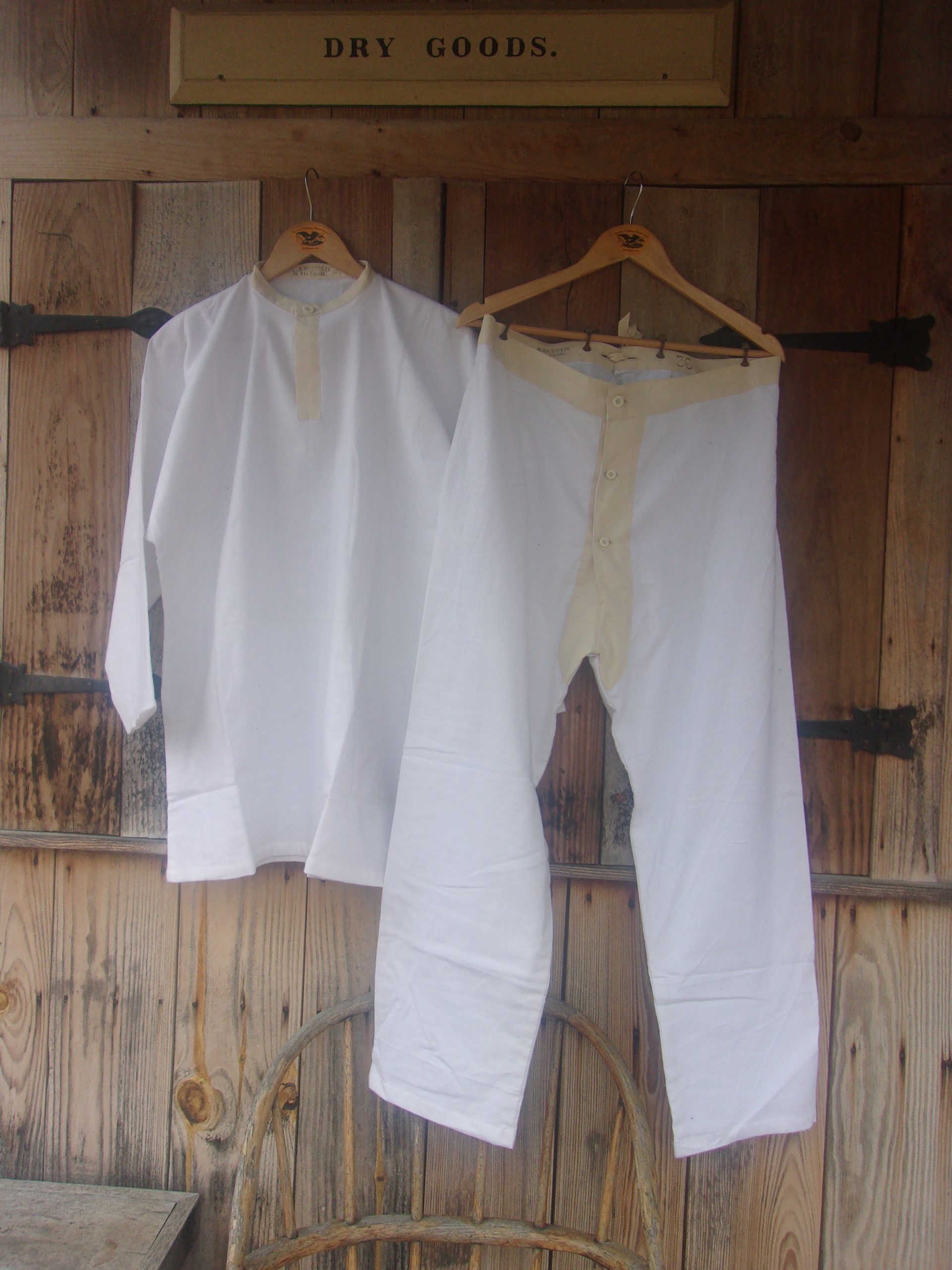
Undershirts or Drawers-White Canton Flannel
Price range: $37.95 through $40.95 -
Reviews
There are no reviews yet.